Strand fortification
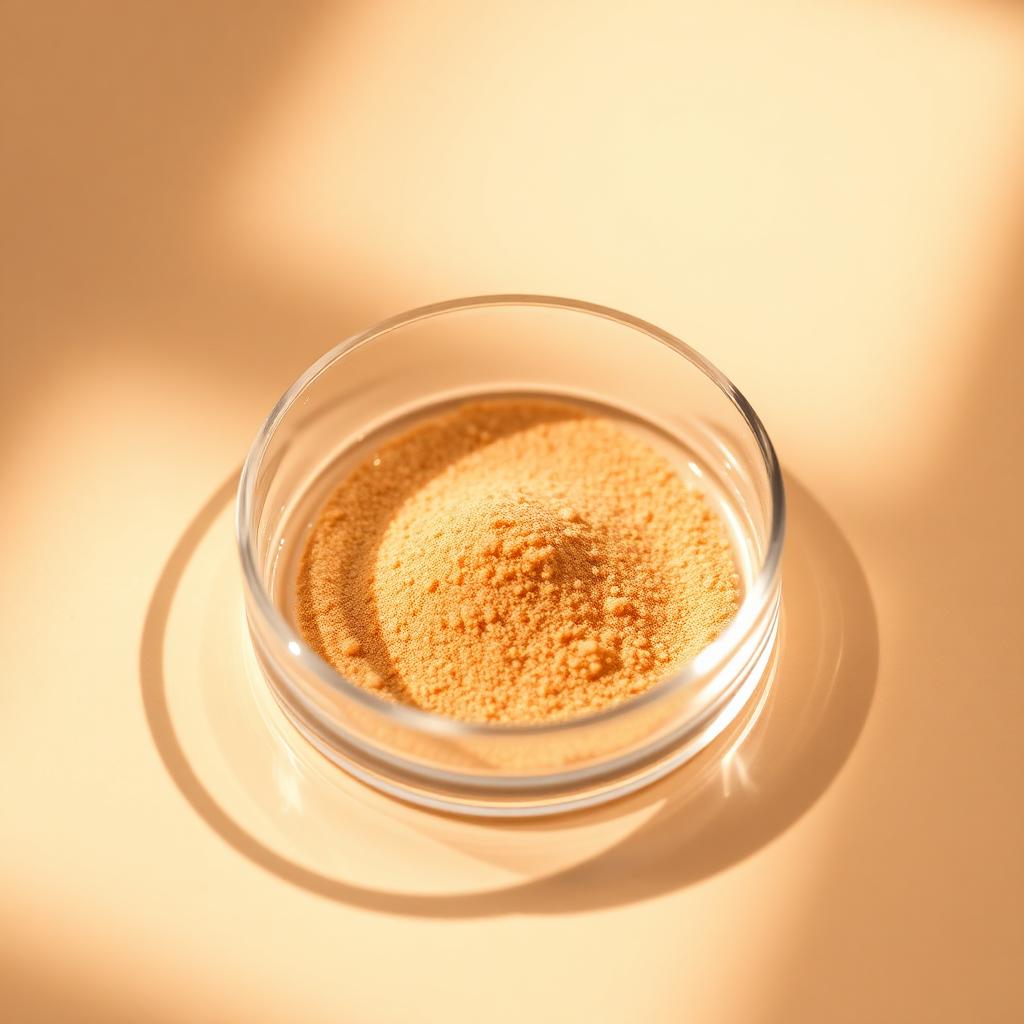
Biotin
A cofactor for keratin infrastructure. Biotin reinforces the strand from the inside — reducing breakage and improving resilience.
- Latin
- Vitamin B7
- Origin
- Cosmetic-grade Vitamin B7
- Process
- Blended into the oil phase for scalp absorption
- Dose
- In-formula — one application delivers active dose
- Family
- Vitamin B group
- Part used
- Vitamin B7 (biotin)
- — Biotin (vitamin B7 / vitamin H)
About
Supports the keratin scaffolding that gives each strand its thickness, elasticity and resistance to breakage.
What it does
- Supports keratin production
- Reduces breakage and split ends
- Promotes thicker-looking hair
- Improves strand elasticity
How it works
Cofactor for the carboxylase enzymes that build keratin protein.
Reinforces the internal scaffolding responsible for tensile strength.
Smooths the cuticle so light reflects evenly — visible gloss.
Supports the metabolic activity of the follicle's rapidly-dividing cells.
History & heritage
Biotin was isolated in the 1930s, when researchers noticed that laboratory animals fed large amounts of raw egg white (which contains avidin, a biotin-binding protein) developed hair loss and skin lesions — a condition that reversed completely with a specific yeast extract. That extract was biotin. From the 1940s onwards biotin has been a defining nutrient in the science of hair, skin and nail health, and biotin deficiency remains one of the very few nutritional causes of hair loss that reliably reverses with supplementation.
Traditional uses through history
- 011930s deficiency-reversal research
- 02Post-war supplementation for hair and nail health
- 03Standard entry in every dermatology hair-loss workup
- 04Ubiquitous ingredient in modern hair supplements
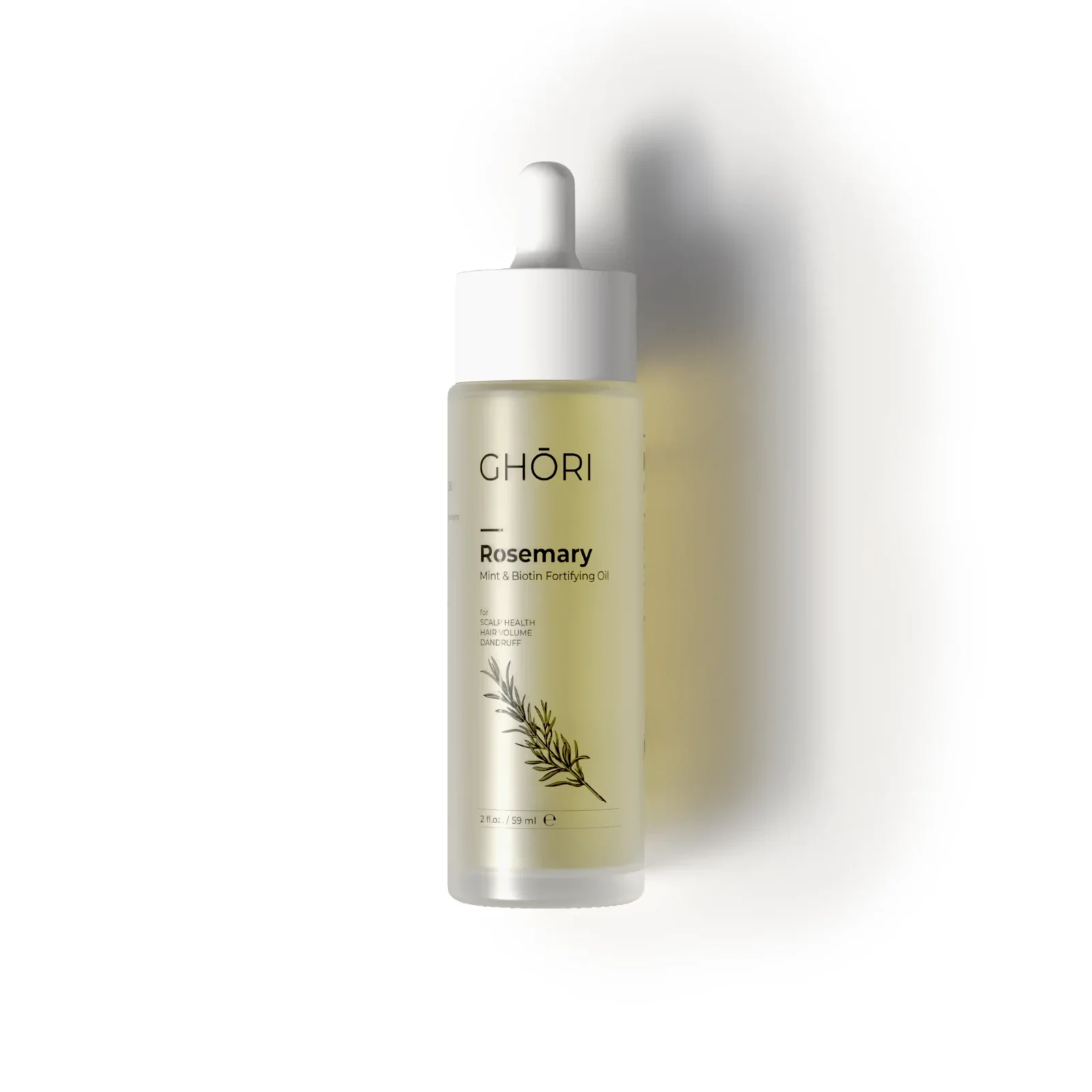
Biotin acts as a coenzyme for four carboxylase enzymes involved in metabolism — including the enzymes that build the amino acids that form keratin. In genuine biotin deficiency, supplementation reliably reverses hair thinning and brittle nails. Topical delivery via a lipophilic carrier (like Ghori® rosemary oil) allows biotin to penetrate close to the follicle where it is most useful.
How it actually works
Supports keratin production
Biotin is a cofactor for the enzymes that build the amino acid backbone of keratin, the primary protein of hair.
Strengthens the shaft
Adequate biotin at the follicle reduces breakage and improves nail plate integrity — both markers of hair-forming metabolism.
Enables follicle metabolism
Without biotin, the metabolic enzymes at the follicle simply cannot function at full capacity.
Best for
Water-soluble vitamin with a very wide safety margin. High-dose oral biotin can interfere with certain lab tests — inform your doctor. Topical application is not associated with this effect.
- — Rosemary Leaf Oil
- — Panthenol
- — Horsetail Extract