Strand conditioning
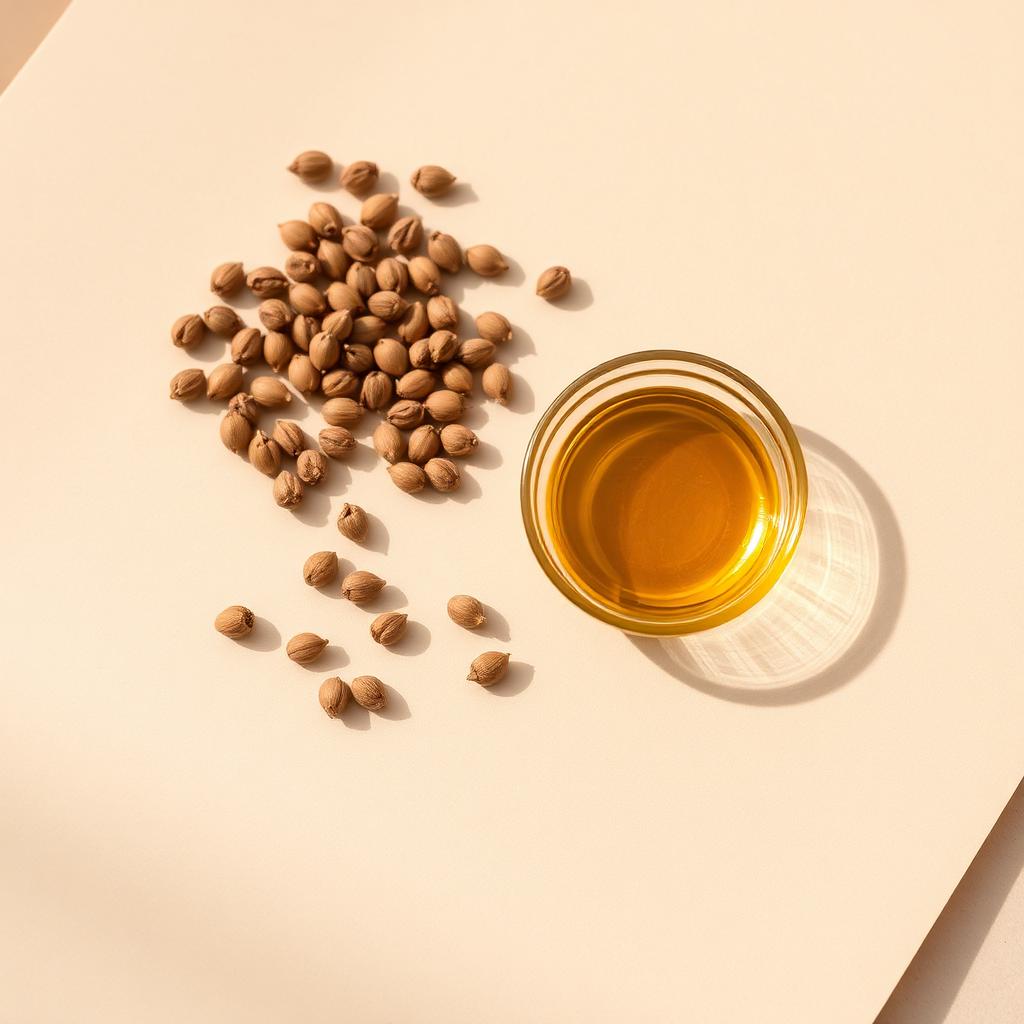
Castor Seed Oil
Rich in ricinoleic acid — traditionally used to condition strands, seal the cuticle and add visible density along the lengths.
- Latin
- Ricinus Communis
- Origin
- Cold-pressed castor beans
- Process
- Blended into the carrier phase
- Dose
- In-formula
- Family
- Euphorbiaceae
- Part used
- Seeds — oil expressed and refined to cosmetic grade
- — Ricinoleic acid
- — Oleic acid
- — Linoleic acid
- — Tocopherols
About
Coats and conditions each strand, sealing moisture and adding visible thickness and shine.
What it does
- Seals the cuticle for shine
- Conditions dry, brittle lengths
- Reduces frizz and flyaways
- Adds visible density
How it works
Ricinoleic-acid-rich oil coats uneven cuticle edges, improving smoothness and gloss.
Its occlusive film slows moisture loss from dry, porous lengths.
Added lubrication reduces snagging and mechanical breakage during grooming.
Castor oil is an established cosmetic conditioner, although human evidence for direct hair-growth stimulation is currently insufficient.
History & heritage
Castor oil has an exceptionally long cosmetic record. Seeds of Ricinus communis have been found in ancient Egyptian sites, and the oil appears in Egyptian, Greek, Ayurvedic and later European preparations for skin and hair. Its unusually high ricinoleic-acid content gives it the dense, glossy texture that distinguished it from lighter seed oils. Modern cosmetic-grade castor oil is carefully expressed and refined; the toxic protein ricin remains in the seed residue and is not present in properly processed oil.
Traditional uses through history
- 01Ancient Egyptian hair and skin conditioning oil
- 02Ayurvedic scalp massage and protective hair packs
- 03Traditional pomade for edges, brows and dry ends
- 04Carrier oil for concentrated aromatic botanicals
Castor oil is well established as an emollient and occlusive conditioner, but direct human evidence that it increases follicle number or growth rate is lacking. Its value in hair care comes from coating the cuticle, reducing moisture loss and friction, and increasing visible gloss. Ricinoleic acid also shows anti-inflammatory and antimicrobial activity in laboratory work, although these findings do not establish castor oil as a treatment for scalp disease or alopecia.
How it actually works
Seals the cuticle
Its viscous fatty-acid film fills surface irregularities, reducing roughness and improving reflected shine.
Reduces moisture escape
The occlusive layer slows water loss from dry fibres and helps ends remain flexible between washes.
Lowers mechanical friction
Improved lubrication reduces snagging during combing and styling, helping fragile lengths retain their apparent density.
Best for
Cosmetic-grade castor oil is generally well tolerated, although its dense texture can cause buildup on fine or oily hair. Patch test before use and avoid applying to an actively inflamed scalp.
- — Coconut Oil
- — Vitamin E
- — Rosemary Leaf Oil