Protein retention
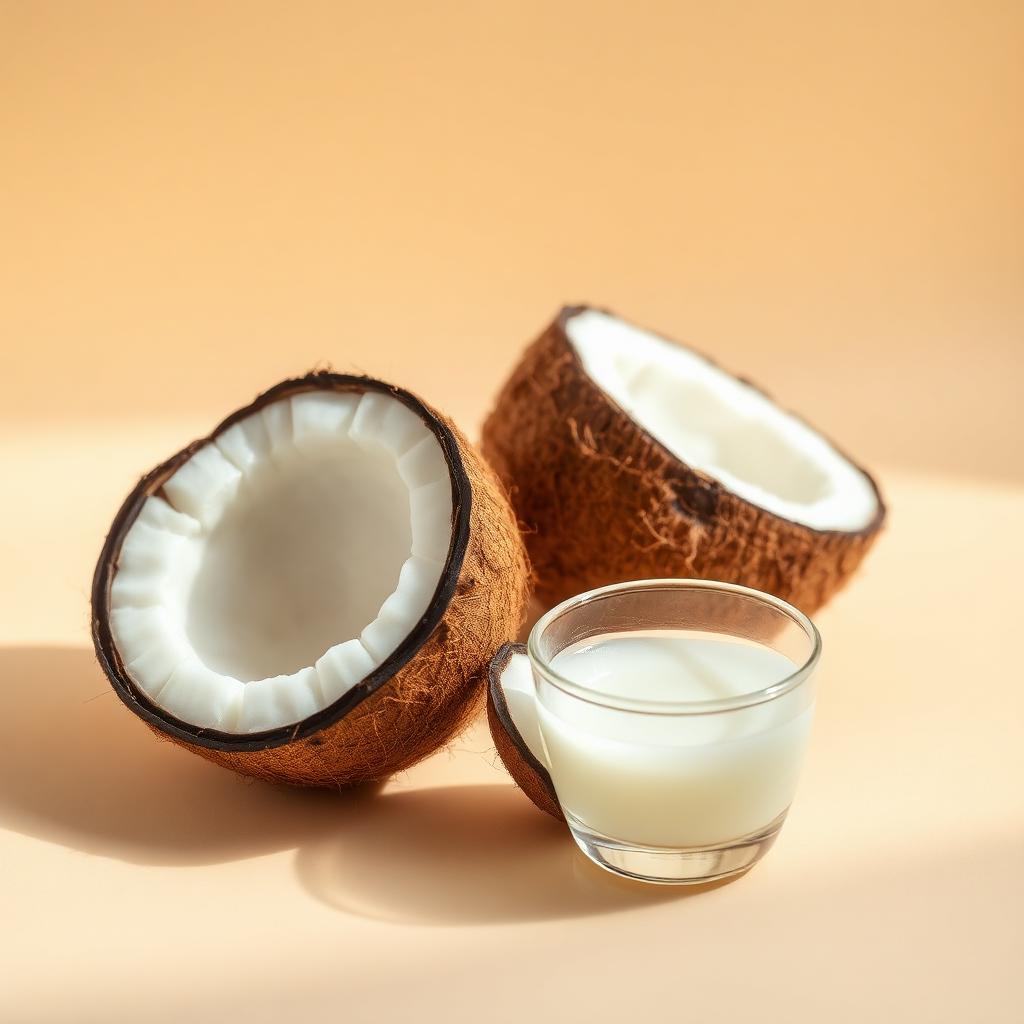
Coconut Oil
One of the only oils shown to penetrate the hair shaft — reducing daily protein loss and protecting strands from breakage.
- Latin
- Cocos Nucifera
- Origin
- Cold-pressed coconut flesh
- Process
- Refined virgin coconut oil
- Dose
- In-formula
- Family
- Arecaceae
- Part used
- Mature coconut kernel — expressed oil
- — Lauric acid
- — Myristic acid
- — Caprylic acid
- — Capric acid
About
Penetrates the cortex to reduce protein loss and protect strands from mechanical damage.
What it does
- Reduces protein loss when washing
- Softens and detangles
- Protects against heat & friction
- Boosts overall shine
How it works
Lauric acid has an affinity for keratin and can move beyond the cuticle into the hair fibre.
Pre-wash and post-wash use can reduce protein loss from damaged and undamaged hair.
The lipid film reduces water-driven swelling, friction and breakage along the lengths.
Controlled hair-fibre studies support coconut oil for reducing protein loss; this protects existing strands rather than proving new follicle growth.
History & heritage
Coconut oil has been central to hair care across South and Southeast Asia, the Pacific and coastal East Africa for centuries. Traditional routines apply the oil before washing to protect long hair from water and handling. Modern fibre science has helped explain this practice: coconut oil's high lauric-acid content and straight molecular structure give it an affinity for hair proteins and allow part of the oil to penetrate beyond the cuticle.
Traditional uses through history
- 01Pre-wash oiling across South Asian hair traditions
- 02Pacific Island conditioning for sun- and salt-exposed hair
- 03Ayurvedic carrier for infused herbs
- 04Protective dressing for long, braided or textured hair
Among commonly tested cosmetic oils, coconut oil has some of the clearest evidence for reducing protein loss from hair fibres. Controlled fibre studies found benefits when it was used before or after washing on both damaged and undamaged hair. This is a strand-protection effect, not proof of new follicle growth: coconut oil helps preserve existing length by reducing swelling, porosity and grooming-related breakage.
How it actually works
Penetrates the fibre
Lauric acid has a low molecular weight and strong affinity for keratin, allowing it to move into the hair shaft rather than remaining only on the surface.
Reduces wash-related protein loss
Pre-wash oiling limits repeated water-driven swelling and contraction, helping the cuticle retain structural proteins.
Improves flexibility and slip
A thin lipid film lubricates neighbouring fibres, reducing combing force, tangling and breakage along the lengths.
Best for
Generally safe for topical cosmetic use. Coconut oil can feel heavy or contribute to buildup on fine hair and may not suit every acne-prone hairline. Patch test if coconut sensitivity is suspected.
- — Castor Seed Oil
- — Vitamin E
- — Aloe Vera