Silica · Structure
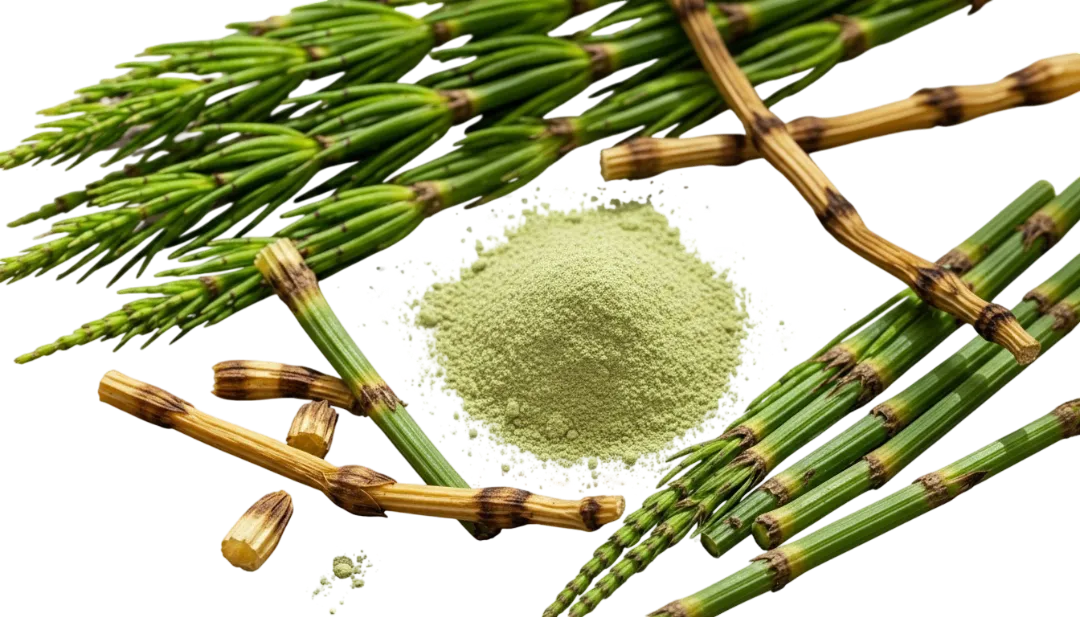
Horsetail Extract
A natural source of silica, a mineral linked to keratin structure and strand strength. Concentration: 3% extract.
- Latin
- Equisetum arvense
- Origin
- Aerial parts of Equisetum arvense
- Process
- Aqueous extraction, then micronised for bioavailability
- Dose
- Concentration: 3% extract
- Family
- Equisetaceae
- Part used
- Sterile aerial stems
- — Organic silica (up to 10%)
- — Flavonoids
- — Potassium
- — Saponins
About
One of nature's most concentrated sources of bioavailable silica, a mineral associated with keratin strength and elasticity.
What it does
- Provides silica associated with keratin synthesis
- Supports strand strength and elasticity
- Helps improve the appearance of breakage resistance
- Supports scalp connective tissue
How it works
Silicic acid is thought to support disulfide bond formation, the scaffolding of keratin fibres.
Silica provides a mineral cofactor used by keratinocytes during fibre synthesis.
Horsetail flavonoids support collagen density in the dermal sheath around follicles.
Improved cuticle flexibility helps hair bend without snapping under mechanical stress.
Horsetail is traditionally used for its silica content in hair and nail formulations.
History & heritage
Equisetum arvense — horsetail or 'scouring rush' — is one of the oldest plants on Earth, a living fossil that has changed little in 400 million years. Because its stems are so rich in silica they were used across medieval Europe to polish metal and scrub cookware. Greek physicians Dioscorides and Galen prescribed horsetail decoctions for wounds and hair loss. In the Islamic medical tradition (Ibn Sina, 11th century) it was recommended as a tonic for brittle nails and thinning hair — uses that modern nutritional science has largely vindicated.
Traditional uses through history
- 01Wound-healing poultice (Ancient Greece and Rome)
- 02Ibn Sina's tonic for brittle hair and nails
- 03Traditional European remedy for oedema
- 04Folk hair rinse for shine and strength
Horsetail is the most concentrated botanical source of bioavailable silica known. Silica is a required cofactor for the enzymes that cross-link collagen and build the keratin protein your hair is made of. Studies on oral silica supplementation have shown measurable increases in hair thickness and tensile strength. Applied topically, horsetail delivers silica directly to the follicle and forms part of the mineral matrix the new hair shaft is built from.
How it actually works
Supplies bioavailable silica
Silica is essential for building the disulfide bonds in keratin — the protein that gives each strand its strength and flexibility.
Reinforces the hair shaft
Regular exposure to silica-rich extract measurably improves tensile strength and reduces breakage.
Firms the scalp matrix
Silica supports the collagen scaffolding of the dermis where the follicle is anchored.
Best for
Only Equisetum arvense (not E. palustre) is used cosmetically. No topical contraindications reported.
- — Biotin
- — Panthenol
- — White Ginseng