Circulation & Freshness
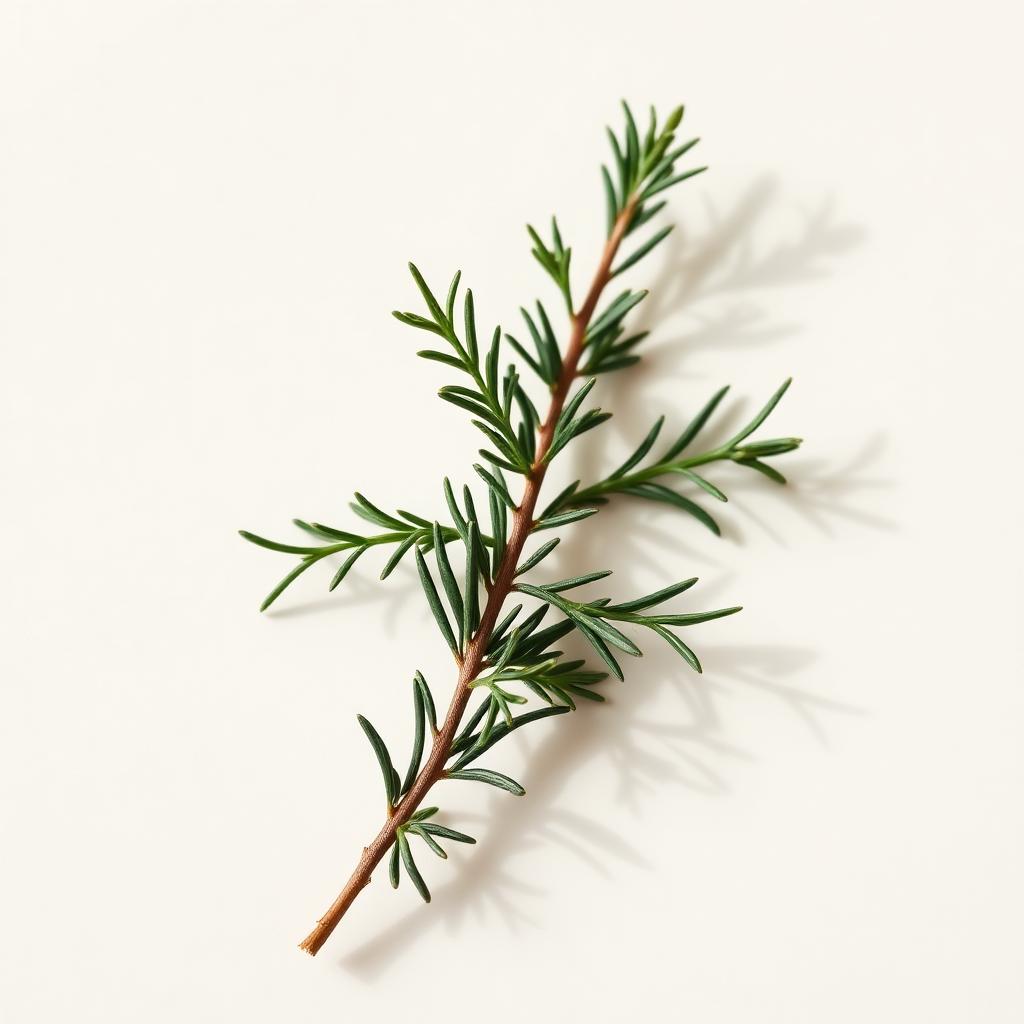
Rosemary
Rosemary leaf extract shown in trials to rival minoxidil 2% for supporting hair density — added at cosmetic level to freshen and awaken the scalp.
- Latin
- Rosmarinus officinalis
- Origin
- Mediterranean rosemary leaves
- Process
- Steam-distilled + aqueous extract
- Dose
- Every wash
- Family
- Lamiaceae (mint family)
- Part used
- Aerial parts — leaves and flowering tops
- — Carnosic acid
- — Rosmarinic acid
- — 1,8-cineole
- — Camphor
About
Adds a clean herbal fragrance and boosts scalp circulation, supporting the daily lotion routine every time you wash.
What it does
- Increases blood flow to the follicle
- Calms scalp inflammation
- Freshens with a clean herbal aroma
History & heritage
Rosmarinus officinalis has grown wild along the Mediterranean coast for over 5,000 years. Ancient Greek scholars wore rosemary garlands during examinations, believing it sharpened memory. Egyptian tombs from 3,000 BC contained sprigs of rosemary, and Roman physicians prescribed rosemary-infused oils for scalp massage to darken hair and prevent baldness. Medieval European monks distilled it into 'Queen of Hungary Water' — one of the first alcohol-based cosmetics on record — used for a wide range of scalp and skin complaints.
Traditional uses through history
- 01Roman scalp oil to prevent hair loss and greying
- 02Medieval European hair rinse for shine and freshness
- 03Ayurvedic scalp massage for kapha imbalance
- 04Middle Eastern folk remedy for dandruff
A landmark 2015 randomised trial (Panahi et al., SKINmed Journal) compared rosemary oil to minoxidil 2% over six months in 100 men with androgenetic alopecia. Both groups showed statistically significant increases in hair count, with rosemary matching minoxidil on the primary endpoint — and with less scalp itching. Further studies have shown rosemary extract inhibits 5-alpha-reductase and stimulates dermal blood flow, giving it a dual circulation + DHT-modulation profile.
How it actually works
Boosts scalp circulation
Volatile terpenes cause a mild, warming vasodilation that increases oxygen and nutrient delivery to the follicle base.
Modulates DHT locally
Carnosic and rosmarinic acids show mild 5-alpha-reductase inhibition, complementing the saw palmetto pathway.
Calms scalp inflammation
Powerful anti-inflammatory and antimicrobial activity reduces low-grade irritation that would otherwise drive shedding.
Best for
Generally well tolerated. Avoid direct application of undiluted essential oil. Use cosmetic-grade extracts at label concentration. Pregnant women should consult a clinician before use of concentrated rosemary essential oil.
- — Saw Palmetto
- — Peppermint Oil
- — White Ginseng