Circulation
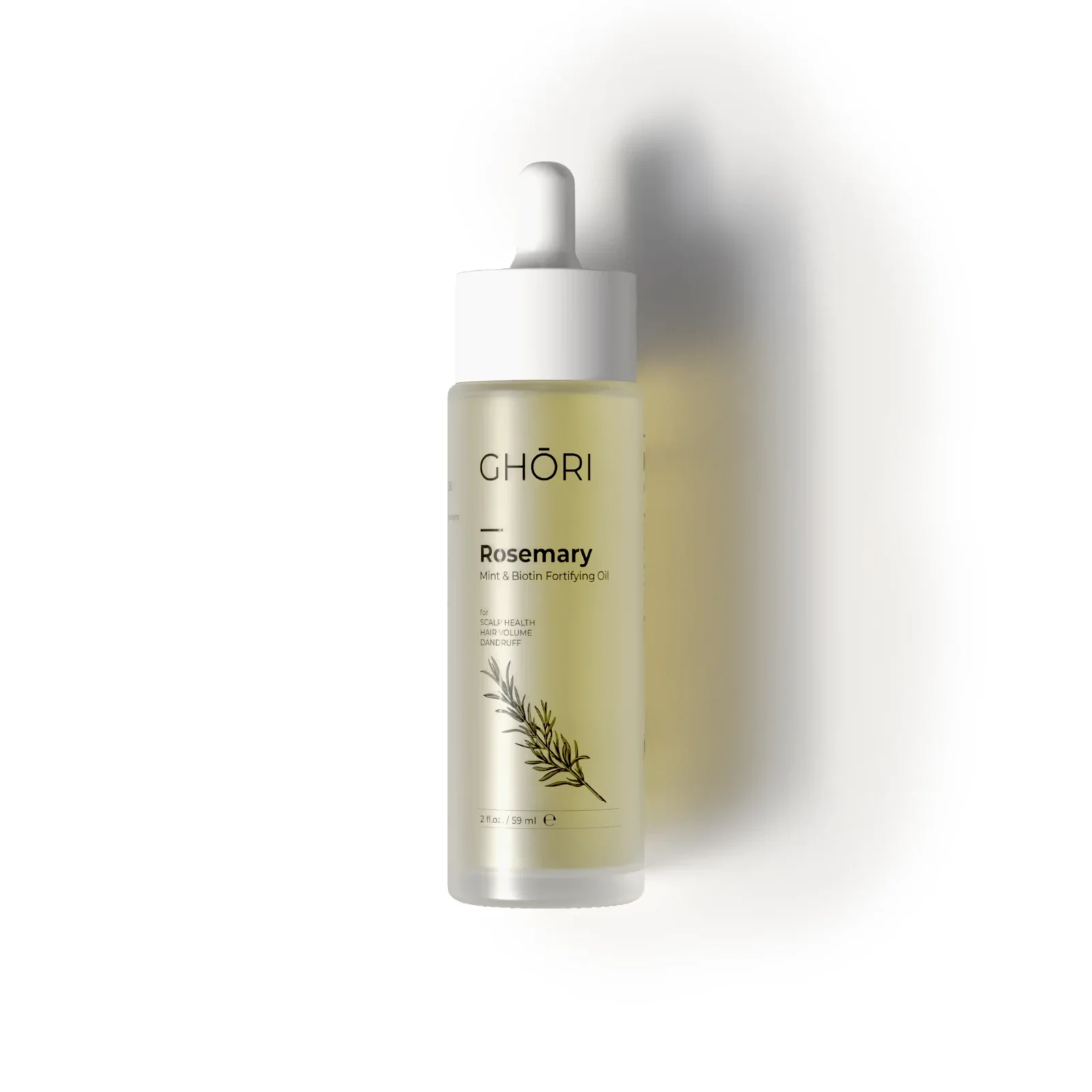
Rosemary Leaf Oil
One of the most studied botanicals for hair fullness. Warms the scalp micro-vasculature and delivers nutrients directly to the follicle.
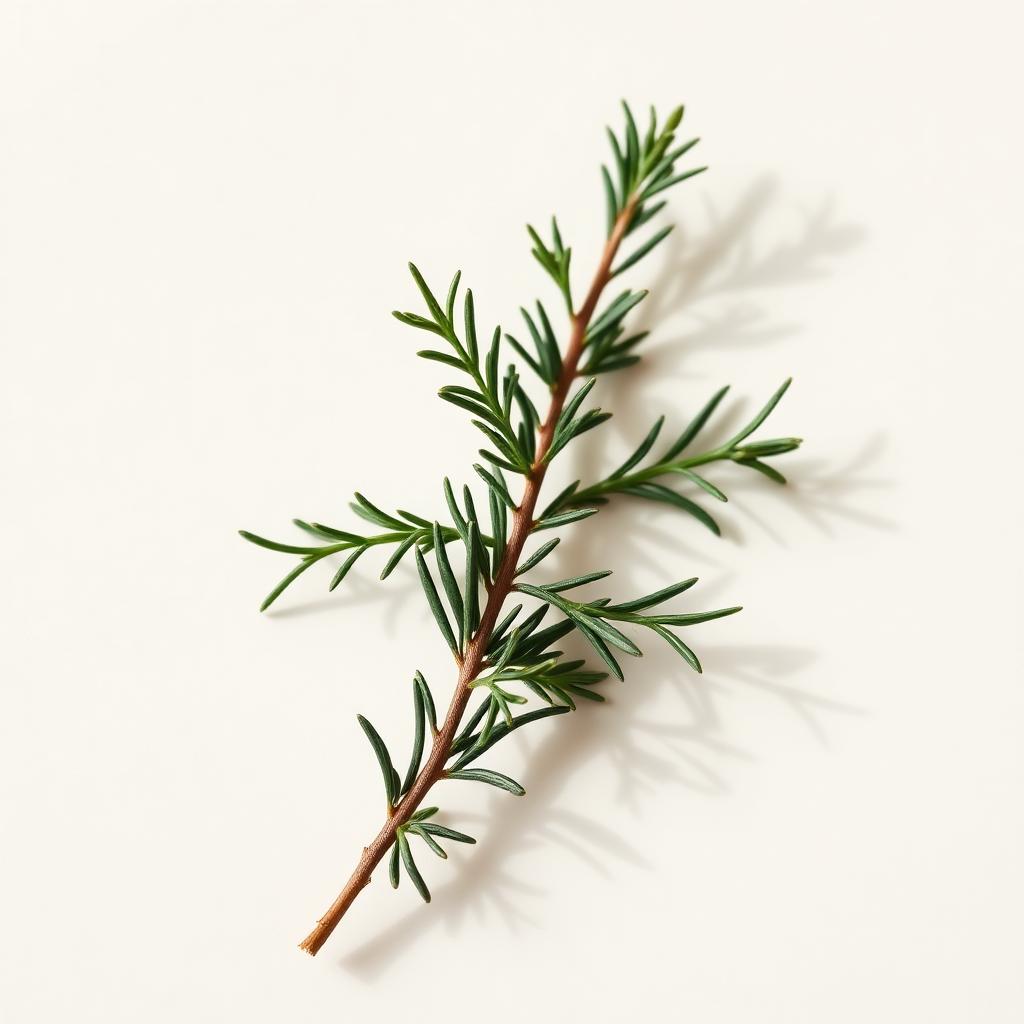
- Latin
- Rosmarinus Officinalis
- Origin
- Distilled from Rosmarinus officinalis, Mediterranean-grown
- Process
- Steam distillation, cold-blended into carrier oils
- Dose
- A few drops massaged into the scalp
- Family
- Lamiaceae
- Part used
- Fresh leaves — steam distilled essential oil
- — 1,8-cineole
- — Camphor
- — Alpha-pinene
- — Rosmarinic acid
- — Carnosic acid
About
Stimulates scalp circulation to feed the follicle at the root — where visible fullness actually begins.
What it does
- Stimulates scalp micro-circulation
- Strengthens hair roots
- Reduces premature shedding
- Supports thicker, fuller-looking hair
How it works
1,8-cineole warms scalp capillaries so more oxygen and nutrients reach the papilla.
Carnosic acid protects the follicle stem-cell niche from oxidative stress.
Supports a longer active growth phase, meaning fewer strands cycle into shedding.
Improves the root's grip inside the follicle, reducing everyday fall.
Rosemary oil has been clinically compared favourably to standard hair-growth treatments in published trials.
History & heritage
Rosmarinus officinalis has been sacred and medicinal in the Mediterranean world since antiquity. Greek students wore garlands of rosemary during exams for memory. Roman physicians prescribed rosemary oil for scalp health and hair strength. In medieval Europe rosemary infusions were the standard tonic for thinning hair. The recent surge in scientific interest began in 2015 when a landmark six-month randomised trial in SKINmed showed 2% rosemary oil produced hair-growth results comparable to 2% minoxidil — with significantly less scalp itching.
Traditional uses through history
- 01Ancient Greek and Roman hair tonic
- 02Medieval European tincture for thinning hair
- 03Traditional Mediterranean cooking herb and preservative
- 04Aromatherapy for memory, focus and circulation
The 2015 Panahi trial (SKINmed) directly compared 2% rosemary oil against 2% minoxidil in men with androgenetic alopecia over six months. Both groups showed significant hair count increases; the rosemary arm reported far less scalp itching. Subsequent studies have supported rosemary's role as a circulation-boosting, DHT-modulating and antioxidant scalp active — and it remains one of the very few natural ingredients backed by a direct comparator trial against a pharmaceutical.
How it actually works
Increases scalp circulation
Warming compounds gently dilate scalp capillaries, delivering more oxygen and nutrients to the follicle.
Modulates DHT locally
Carnosic acid demonstrates 5-alpha-reductase modulation, reducing the local androgen signal that miniaturises follicles.
Neutralises oxidative stress
Rosmarinic and carnosic acid are two of the most potent plant antioxidants known.
Best for
Dilute in a carrier oil for direct scalp use (Ghori® is already formulated at cosmetic-grade dilution). Avoid during pregnancy at high concentrations.
- — Peppermint Oil
- — Biotin
- — Vitamin E