Antioxidant protection
Vitamin E
Neutralises daily oxidative stress on the scalp — a known driver of dulling, thinning and premature greying.
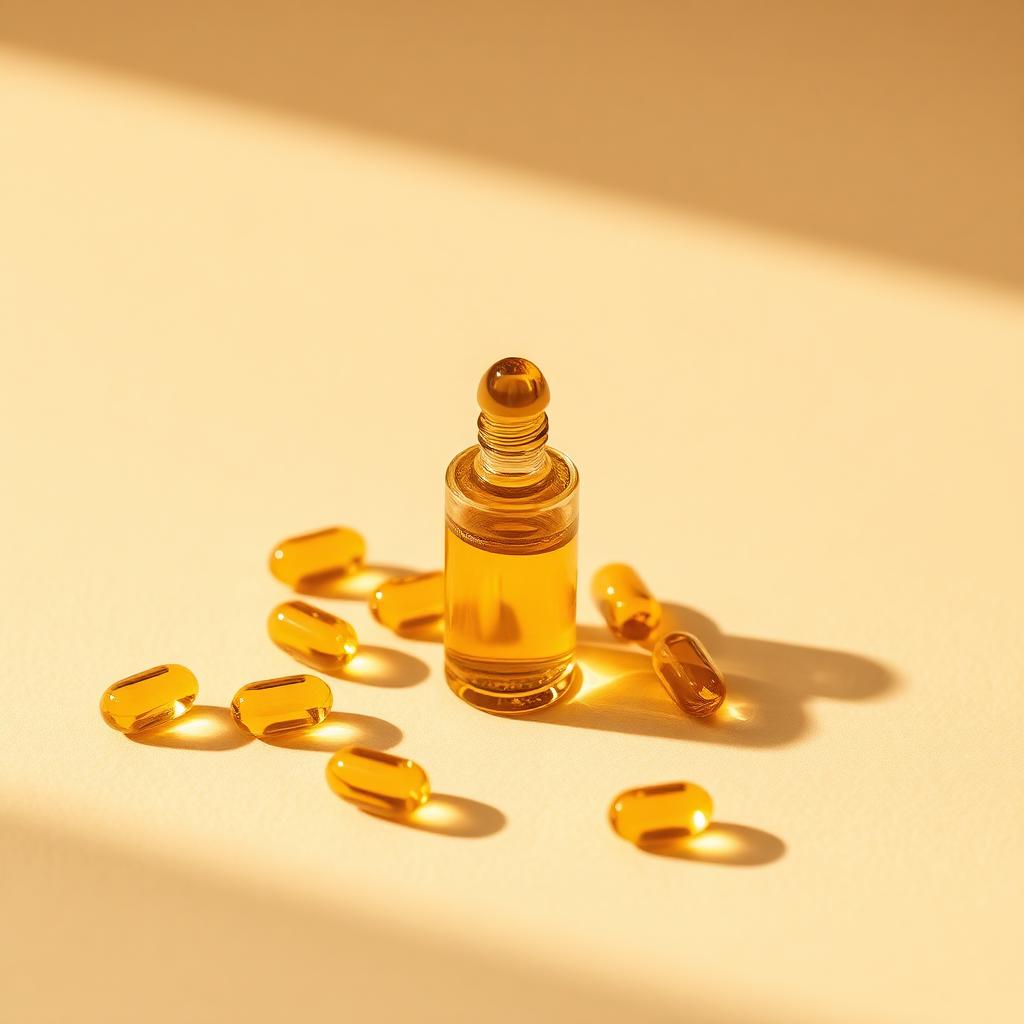
- Latin
- Tocopheryl Acetate
- Origin
- Botanical Vitamin E complex
- Process
- Cold-blended into carrier oils
- Dose
- In-formula
- Family
- Fat-soluble vitamins (tocopherol family)
- Part used
- Tocopherol / tocopheryl acetate
- — Alpha-tocopherol
- — Mixed tocopherols
About
Shields the scalp and strands from the daily oxidative load that accelerates dullness and thinning.
What it does
- Neutralises daily free radicals
- Supports overall scalp health
- Adds natural luster and softness
- Extends shelf-life and integrity of the oil blend
How it works
Scavenges reactive oxygen species that damage follicular DNA.
Reinforces the scalp lipid barrier against pollution and UV.
Improves light-reflection on the cuticle — visible gloss.
Protects the delicate oil phase from oxidation over time.
History & heritage
Vitamin E was discovered in 1922 by Herbert Evans and Katharine Bishop at UC Berkeley, who found a fat-soluble compound in wheat germ oil essential for reproduction in rats. Its Greek-derived name — tocopherol, 'to carry a pregnancy' — reflects that first discovery. Dermatological use began in the 1950s and vitamin E is now the workhorse antioxidant of cosmetic chemistry, present in almost every serious oil-based formula both to protect the skin and to protect the formula itself from oxidation.
Traditional uses through history
- 011922 nutritional discovery in wheat germ oil
- 02Post-war dermatology for burns and scars
- 03Standard scalp-oil enrichment across the 20th century
- 04Universal antioxidant in modern cosmetic formulation
A 2010 study on tocotrienols (a member of the vitamin E family) showed a measurable increase in hair count in volunteers with mild hair loss after eight months of supplementation. Topically, vitamin E is the primary lipid-soluble antioxidant — it terminates the chain reactions of lipid peroxidation that would otherwise damage cell membranes and the fatty envelope of the follicle. It also stabilises the oil base itself, protecting all the other actives from going rancid.
How it actually works
Terminates lipid peroxidation
Alpha-tocopherol donates an electron to stop free-radical chain reactions in cell membranes and oil formulations alike.
Reinforces the scalp barrier
Fat-soluble and lipophilic, vitamin E integrates directly into the scalp's lipid bilayer, improving hydration and resilience.
Protects the formula
Prevents the oxidation of the carrier oils and other actives — extending the useful life of every drop of product.
Best for
Very high safety profile. Rare contact dermatitis in individuals with vitamin E sensitivity — patch test if concerned.
- — Rosemary Leaf Oil
- — Biotin